
TERRA SIGILLATA FROM CASTRO DE ROMARIZ (SANTA MARIA DA FEIRA, AVEIRO): ROMANIZATION AND ABANDONMENT OF A HILLTOP SETTLEMENT IN NW IBERIAN PENINSULA
DOI:
https://doi.org/10.51679/ophiussa.2019.49Keywords:
Castro de Romariz, roman fine ware, consumption, chrono-stratigraphy, space functionalitiesAbstract
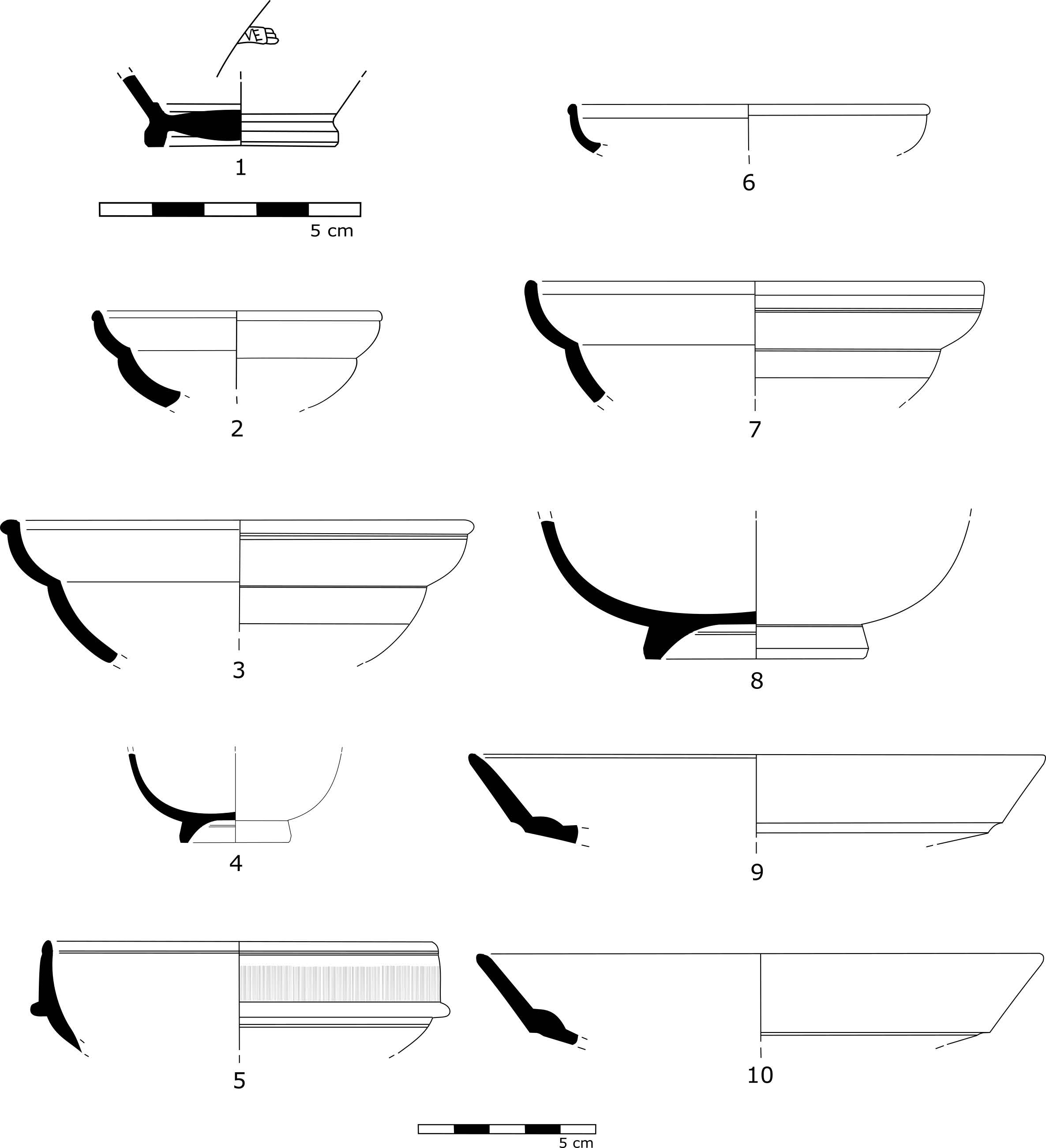
The excavations carried out at Castro de Romariz revealed a sizable Iron Age settlement with a chronological scope extending from the 5th century BC to the first centuries AD. By studying the terra sigillata unearthed during these interventions, we seek to focus on the last phase of occupation and, through the analysis of the chrono-stratigraphic and consumption patterns, we try to outline the settlement’s evolution during the romanization process and its subsequent abandonment in the 2nd century AD. Considering the spatial distribution of terra sigillata fragments, it was also possible to assess the functionality of several structures that constitute the so-called domus, which is the largest dwelling excavated hitherto at the site.
Additional Files
Published
2021-10-15
How to Cite
Vilarinho, Gil. 2021. “TERRA SIGILLATA FROM CASTRO DE ROMARIZ (SANTA MARIA DA FEIRA, AVEIRO): ROMANIZATION AND ABANDONMENT OF A HILLTOP SETTLEMENT IN NW IBERIAN PENINSULA”. Ophiussa. Revista Do Centro De Arqueologia Da Universidade De Lisboa 3 (October):81-92. https://doi.org/10.51679/ophiussa.2019.49.
Issue
Section
Articles